
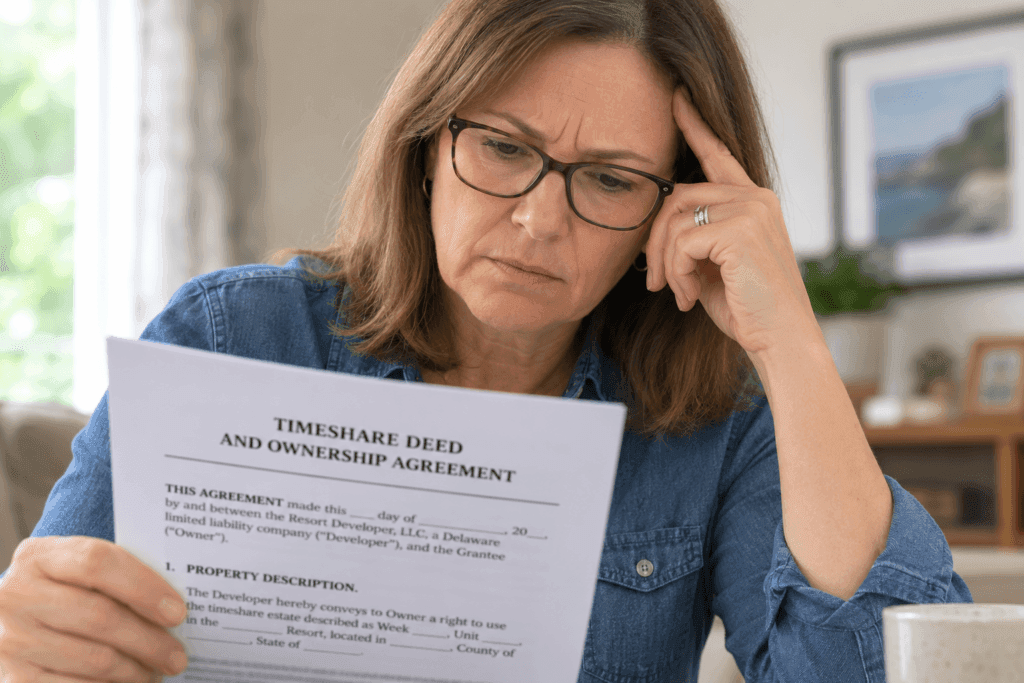
Before you pay anyone to sell your timeshare, you deserve a straight answer about what it actually costs and what you’re really getting for that money.
The Upfront Fee You’ll Be Asked to Pay
Most resale companies charge a listing fee before they do anything to sell your timeshare. Based on real owner reviews across multiple resale platforms, that fee commonly runs from a few hundred dollars up to several thousand. It’s due before a single buyer has shown interest, and before anyone has confirmed your unit will attract offers at all.
What You Get for That Money
Usually, a spot among thousands of similar listings competing for the same small pool of buyers. Some owners report paying to sell their timeshare and waiting years with zero valid offers. Others describe being told to keep lowering their price or paying extra to stay visible, without ever landing a real buyer. A handful of reviewers describe watching hundreds of near-identical listings sit unsold for a month straight, several priced at $1.
Three Ways the Fee Gets Justified
The “market value survey.” A salesperson estimates what your timeshare is worth, often based on other owners’ asking prices rather than actual completed sales. A higher number makes the fee feel like a smaller risk when you’re deciding whether to sell.
The exposure pitch. You’re told your listing will reach thousands of potential buyers across dozens of countries. True, but reach isn’t the same as demand. Being seen by thousands of browsers means little if none of them are ready to buy your specific timeshare.
The “boost your visibility” upsell. Once you’re listed and nothing happens, some companies suggest paying more to move your listing higher, or lowering your price again. Each round costs more without any better guarantee you’ll actually sell.
The Math Rarely Works in Your Favor
Say you pay $1,500 to sell your timeshare, and it eventually sells for $750. You’ve lost money before maintenance fees even enter the picture. Many owners never sell at all, meaning that upfront fee becomes a second sunk cost stacked on top of the timeshare itself.
Why Owners Keep Paying Anyway
Once you’ve spent money trying to sell, it’s hard to walk away. You keep hoping the next price drop will finally work. This is the same thinking that keeps people paying maintenance fees on a timeshare they no longer want: the fear of “wasting” what’s already spent, even when the smarter move is to stop spending altogether.

A Different Way to Think About the Cost
Cancellation has an upfront cost too, but it ends the obligation completely. No more annual maintenance fees, no more hoping a buyer appears, no more paying again to relist.
Frequently Asked Questions
Is the fee to sell my timeshare ever refundable?
Rarely. Most companies keep the fee whether or not your timeshare sells, since it pays for the listing itself, not a guaranteed outcome.
Will paying more to sell my timeshare faster actually help?
Not necessarily. Better placement doesn’t create buyer demand that isn’t there. A well-placed listing in an oversaturated market can still sit for years.
What should I ask before paying to sell my timeshare?
Ask directly how many similar units the company has actually sold in the past year, not how many they’ve listed. Sold, not listed, is the number that matters.
About Me
Fifteen years selling timeshares, ten years helping owners exit. I’ve personally guided 230+ clients through cancellation, and I know exactly how the resale industry pitches its “market value.”
Ready to Compare Your Real Options?
My free review shows you where you actually stand, no upfront fee required to find out.